Huntington's Disease
Huntington's Disease
- Home /
- Huntington’s Disease
Our Huntington’s disease occupational therapy services focus on helping individuals manage movement difficulties, maintain daily living skills, adapt to changing abilities and preserve independence for as long as possible.

What is Huntington's disease?
Huntington’s disease is an inherited, progressive neurological condition affecting movement, cognition and behaviour.
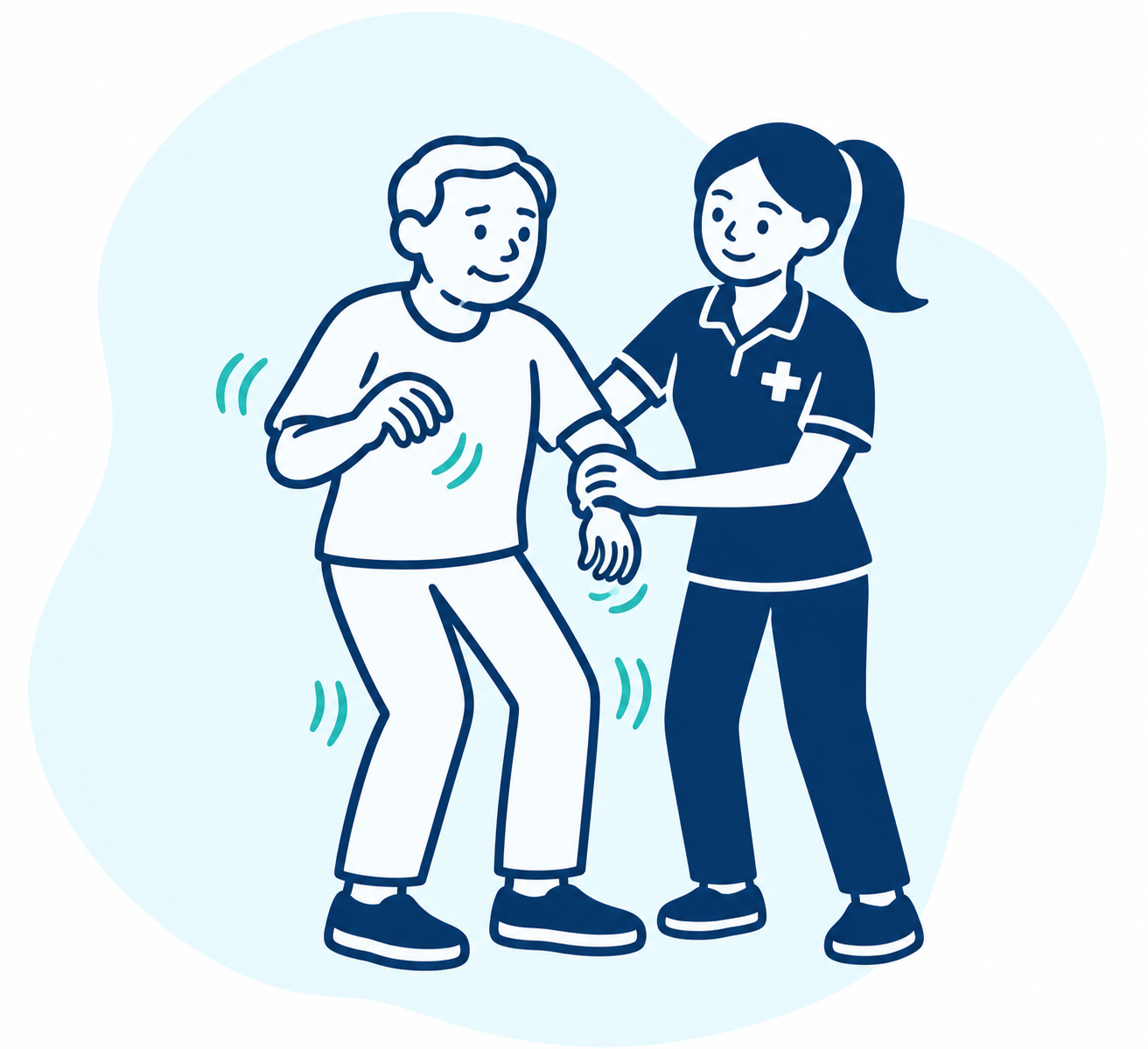
The condition can cause involuntary movements, difficulties with coordination, changes in thinking and planning, reduced judgement and emotional or behavioural changes.
As the condition progresses, individuals may require increasing support with personal care, mobility, household activities and community participation.
Occupational therapy plays an important role in adapting activities and environments to support quality of life and independence.
Common difficulties
Involuntary movements and reduced coordination.
Difficulty maintaining balance.
Problems with planning and organising activities.
Reduced concentration and memory.
Changes in behaviour and emotional regulation.
Difficulty eating, dressing and bathing.
Reduced safety awareness.
Difficulty managing domestic activities.
Increasing dependence on family members and carers.
How occupational therapy can help
Our occupational therapists can provide:
- Functional assessments to identify changing needs.
- Daily living skills assessment and intervention.
- Cognitive strategies and routine development.
- Adaptive equipment recommendations.
- Home safety assessments.
- Environmental modifications.
- Strategies to simplify daily activities.
- Positioning and seating recommendations.
- Carer advice and education.
- Planning for future functional needs.
Benefits of early occupational therapy involvement
Early assessment can help individuals and families anticipate changing needs, introduce appropriate adaptations and develop strategies to maintain independence and safety for as long as possible.