Home Adaptations
- Home /
- Home Adaptations
Our occupational therapy home assessment services identify everyday challenges and recommend suitable home adaptations. We help improve safety, accessibility and independence within the home.
What are home adaptations?
Home adaptations involve modifying a property to improve accessibility, safety and independence for individuals with physical disabilities, reduced mobility, neurological conditions or age-related functional difficulties.
An unsuitable home environment can increase falls risk, restrict mobility and make everyday activities difficult.
Occupational therapy home assessments identify barriers within the property and recommend appropriate modifications based on an individual’s functional abilities and future needs.
Common home accessibility problems
Difficulty accessing the property.
Steps and uneven entrances.
Difficulty using stairs.
Unsafe bathroom and toilet facilities.
Difficulty getting in and out of the bath or shower.
Restricted wheelchair access.
Narrow doorways.
Inadequate grab rails and handrails.
Poor lighting and environmental hazards.
Difficulty accessing bedrooms and kitchens.
How occupational therapy can help
Our occupational therapists can undertake home assessments and recommend:
- Grab rails and handrails.
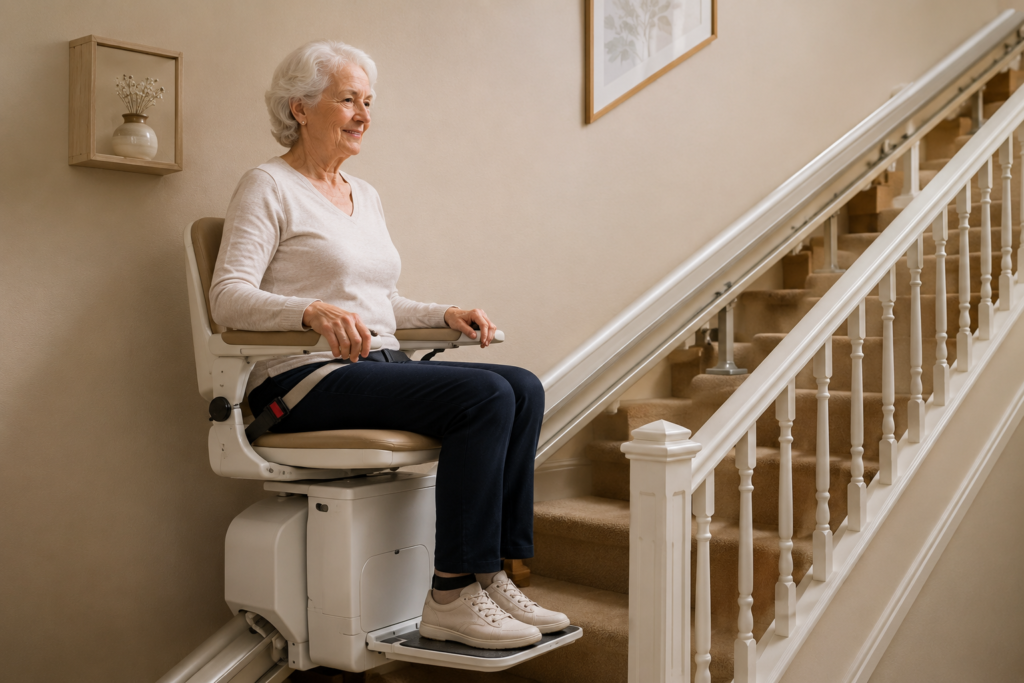
- Stairlifts.
- Ramps and accessible entrances.
- Level-access showers.
- Walk-in showers and accessible bathrooms.
- Raised toilet seats and toilet adaptations.
- Bathroom and shower equipment.
- Kitchen adaptations.
- Doorway widening and accessibility improvements.
- Wheelchair access modifications.
- Specialist beds and transfer equipment.
- Assistive technology and safety equipment.
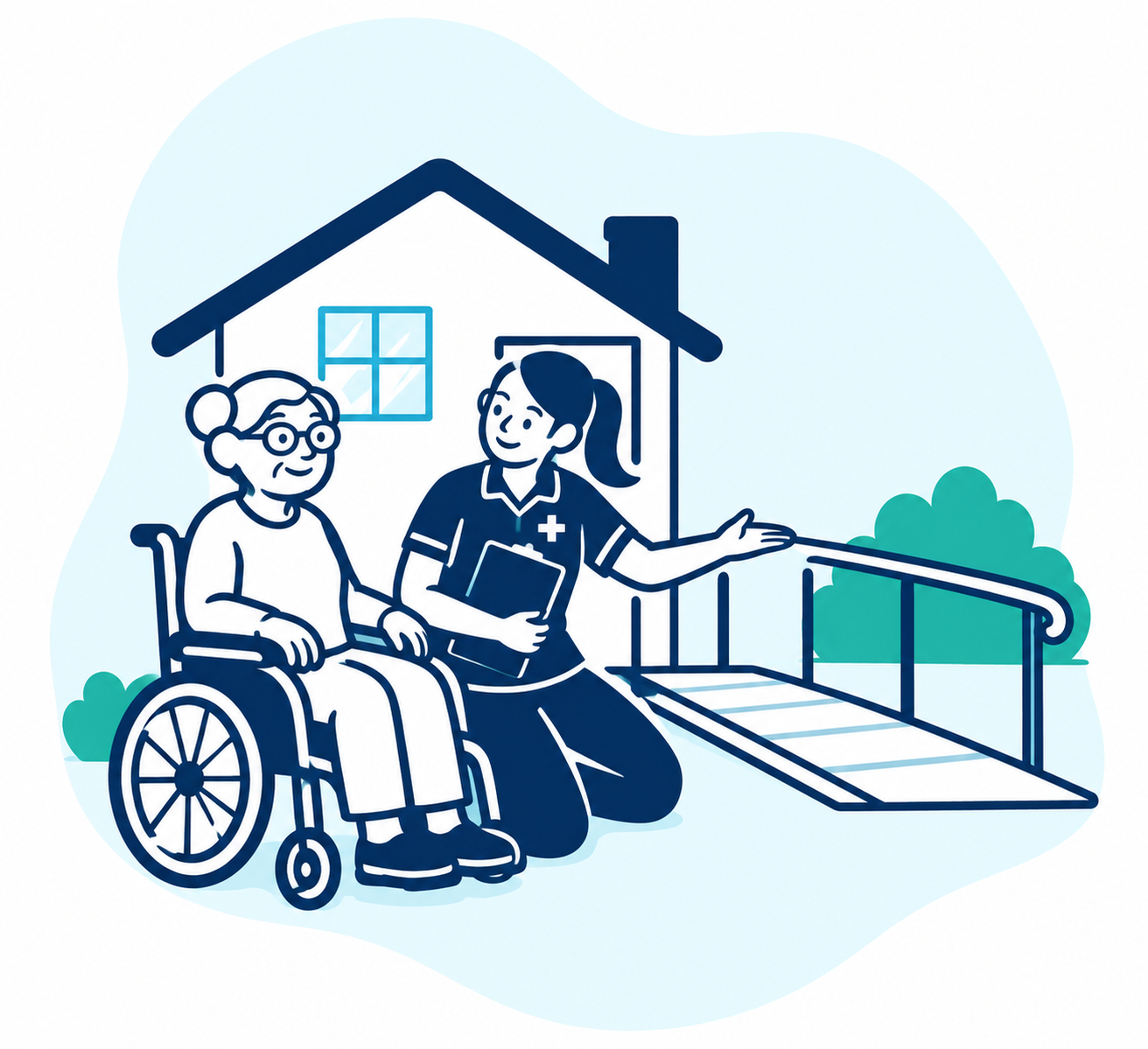
Where structural work is required, recommendations can be coordinated with the relevant housing, technical and building professionals.
Why choose an occupational therapy home assessment?
Our approach considers not only the physical property but also how the individual performs everyday activities within that environment.
The aim is to recommend practical, proportionate adaptations that support independence, reduce avoidable risks and enable people to remain at home safely.
Who can benefit?
Older adults, people recovering from surgery, wheelchair users, people with neurological conditions and individuals living with long-term disabilities.