Parkinson's Disease
Parkinson's Disease
- Home /
- Parkinson’s Disease
Our Parkinson’s occupational therapy services provide specialist support to help individuals manage daily challenges, improve mobility and coordination, build confidence and maintain independence in everyday activities.
What is Parkinson's disease?
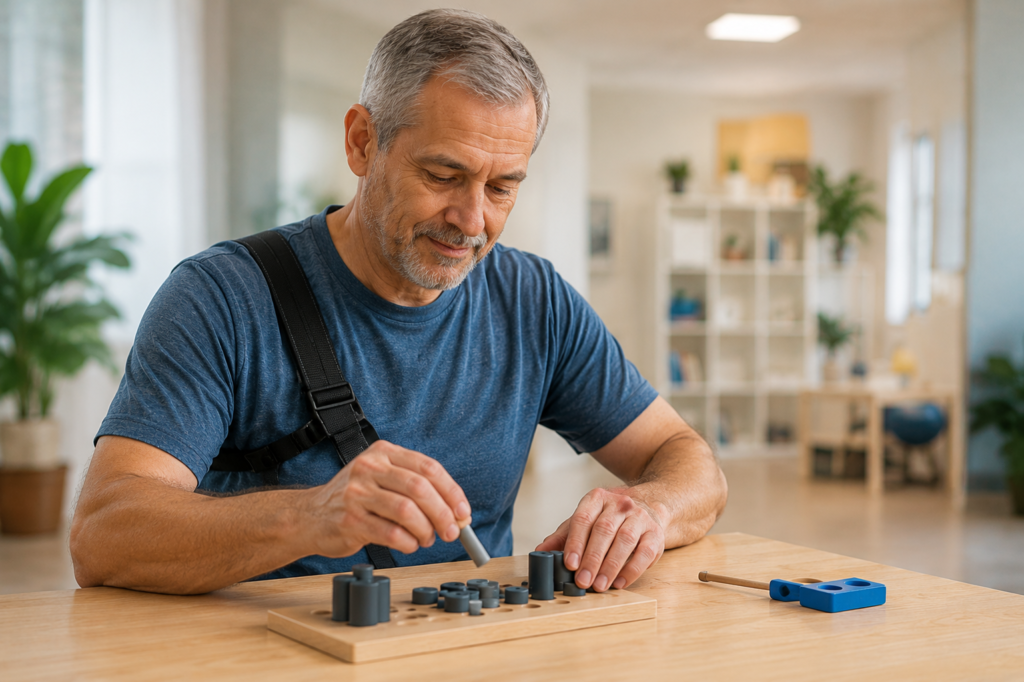
Parkinson’s disease is a progressive neurological condition affecting movement and coordination. It is associated with reduced dopamine production in the brain and can lead to difficulties with balance, posture, walking and fine motor control.
Symptoms may include tremors, stiffness, slowness of movement, fatigue, reduced dexterity and changes in cognition.
As the condition progresses, everyday activities such as dressing, cooking, writing, bathing and household management may become increasingly challenging.
Common difficulties associated with Parkinson's
Tremors affecting hand function.
Muscle stiffness and rigidity.
Slowness of movement.
Difficulty initiating movement.
Freezing episodes during walking
Reduced balance and increased falls risk.
Difficulty with buttons, zips and fastenings.
Handwriting and fine motor difficulties.
Fatigue and reduced endurance.
Difficulty completing household and personal care tasks.
How occupational therapy can help
Our occupational therapy services include:
- Functional assessments of daily living activities.
- Hand function and dexterity strategies.
- Task simplification and activity modification.
- Energy conservation and fatigue management.
- Adaptive equipment recommendations.
- Strategies for dressing and personal care.
- Kitchen and household task adaptations.
- Falls prevention and home safety assessments.
- Environmental modifications.
- Cognitive strategies and routine development.
- Advice on maintaining independence as symptoms progress.

Benefits of occupational therapy
Occupational therapy can help people with Parkinson's maintain independence, conserve energy, manage daily challenges and continue participating in meaningful activities for as long as possible.